

Early Pregnancy hCG Level: What Is Normal in the First Weeks?

The first few weeks of pregnancy are exciting but confusing. You notice early pregnancy cramps, feel more tired than usual, and every little change feels like a clue. One of the most important things your doctor checks early on is your early pregnancy hCG level. Understanding what that number means can bring real peace of mind when everything still feels uncertain.
What Is hCG and Why Does It Matter?
hCG stands for human chorionic gonadotropin. Your body starts producing it right after a fertilized egg attaches to the uterine wall. It signals the ovaries to keep making progesterone, which supports the growing pregnancy.
Both blood tests and home pregnancy tests detect hCG. Rising levels are a strong sign that a pregnancy is developing well.
Understanding Early Pregnancy hCG Level
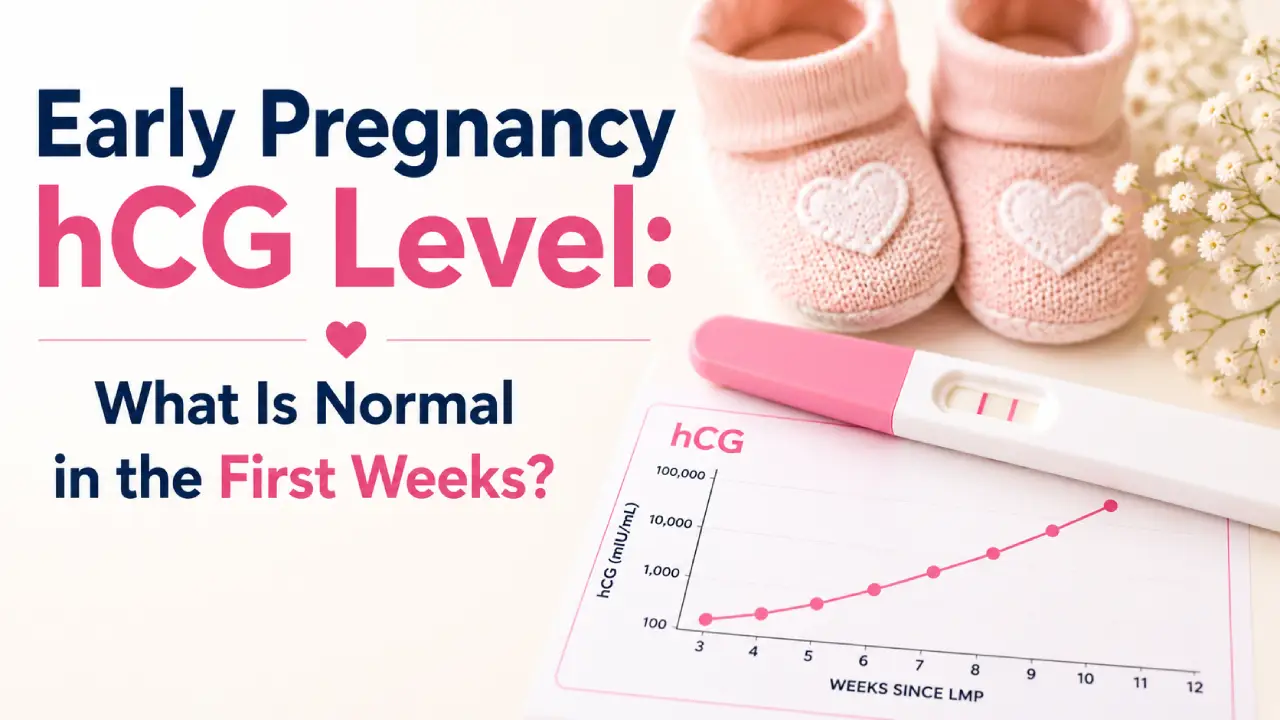
Here is what most people miss: a single hCG number rarely tells the full story. What doctors care about is whether the number rises steadily. In a healthy early pregnancy, hCG typically doubles every 48 to 72 hours in the first several weeks.
Normal ranges also vary widely. Two women at the same stage can have very different numbers and both be completely fine.
Normal hCG Levels Week by Week
These are general reference ranges measured in mIU/mL:
- 3 weeks: 5 to 50
- 4 weeks: 10 to 426
- 5 weeks: 18 to 7,340
- 6 weeks: 1,080 to 56,500
- 7 to 8 weeks: 7,650 to 229,000
- 9 to 12 weeks: 25,700 to 288,000
hCG peaks somewhere around weeks 8 to 11, then slowly tapers off. A decline after that point is completely normal and does not mean something is wrong.

Early Pregnancy Test Results Explained
Home tests work by detecting hCG in urine. Most are accurate around the first day of a missed period. If you test earlier, hCG may not be high enough yet to register, giving you a false negative.
A faint line on a test is still a positive result. If early pregnancy test results shift from positive to negative within a few days, talk to your doctor. This can sometimes indicate a very early pregnancy loss, often called a chemical pregnancy. It is more common than most people realize, and it is not your fault.
For cleaner readings, test first thing in the morning when urine is most concentrated.
Common Early Pregnancy Symptoms
Early Pregnancy Cramps
Mild cramping in the first few weeks is usually normal. When the embryo implants into the uterine wall, it causes light, period-like cramps. As the uterus stretches, cramping can continue through weeks 5 to 8.
Severe cramping, heavy bleeding, or one-sided pain needs immediate medical attention, as these can signal an ectopic pregnancy.
Nausea and Fatigue
Rising hCG is closely tied to morning sickness, which can strike at any hour. Fatigue is also extremely common. Surging progesterone has a sedative effect, so feeling worn out even after a full night’s sleep is completely expected.
Breast Tenderness
Sore, swollen breasts often appear before you even miss a period. Rapid hormonal shifts are responsible, and the sensitivity usually eases after the first trimester.
Does Early Pregnancy Urine Color Change?
Yes, it can. Early pregnancy urine color is something many women notice but rarely ask about. Prenatal vitamins, especially B vitamins, often turn urine a brighter yellow. Dehydration from nausea can darken it too.
Pink or red urine warrants a call to your doctor. Otherwise, pale yellow or clear urine means you are staying well hydrated.
When hCG Levels May Be Low or High
Low levels can sometimes point to a possible miscarriage, an ectopic pregnancy, or incorrect pregnancy dating.
High levels may suggest twins, a molar pregnancy, or that you are simply further along than you thought.
Neither extreme automatically means something is wrong. Your doctor will look at the full picture, including symptoms, ultrasound findings, and how levels change over time.
When to Take a Test for the Most Accurate Results
Wait until the day of your missed period for the most reliable early pregnancy test results. If you want to test earlier, look for tests labeled “early detection,” which can pick up hCG levels as low as 6 mIU/mL, sometimes five or six days before your expected period.
Pills and Abortion: Understanding Misoprostol Pills and Early Pregnancy Care
For women facing unexpected pregnancies, access to clear information is a basic need. Misoprostol is a medication used in medical settings for decades, often combined with mifepristone as part of a medical abortion protocol. Major health organizations consider this approach safe and effective within the recommended timeframe, typically up to 10 to 12 weeks. Women deserve privacy, accurate information, and compassionate care. If you need guidance, a licensed healthcare provider or reproductive health counselor is the best place to start.
When to Call Your Doctor
Reach out to your provider if you experience:
- Heavy vaginal bleeding
- Severe or one-sided pelvic pain
- Dizziness, fainting, or shoulder pain
- hCG levels not rising as expected
- A positive test followed by a negative one
If something feels off, make the call. It is always better to check.
Emotional Health During Early Pregnancy
Early pregnancy is emotionally exhausting, especially after a previous loss. Give yourself permission to feel anxious and excited at the same time. Both are valid. Lean on people you trust, and consider speaking with a counselor if the worry becomes overwhelming.
Key Takeaways
- hCG is the hormone pregnancy tests detect, and rising levels signal a developing pregnancy.
- The exact number matters less than whether it doubles every 48 to 72 hours.
- Normal ranges vary widely. One reading alone cannot confirm or rule out a healthy pregnancy.
- Early pregnancy cramps, nausea, fatigue, and breast tenderness are all common and usually normal.
- Early pregnancy urine color may shift due to vitamins or hydration levels.
- Pink or red urine, severe pain, or falling hCG levels all need prompt medical attention.
Frequently Asked Questions
1. What hCG level confirms pregnancy?
A level of 5 mIU/mL or higher is considered a positive result. Most doctors look for levels above 25 mIU/mL before making a clinical confirmation.
2. Can I have normal early pregnancy cramps with good hCG levels?
Yes. Mild cramping is common even when hCG levels are rising perfectly. Implantation and uterine stretching both cause mild discomfort in the first few weeks.
3. Why did my early pregnancy test results change from positive to negative?
This may indicate a chemical pregnancy, a very early loss before the embryo fully implants. It is painful but medically common. Speak with your doctor for proper evaluation.
4. Does early pregnancy urine color affect test accuracy?
Diluted urine can reduce test sensitivity. Testing with first-morning urine gives the most accurate early pregnancy test results since it is the most concentrated.
5. How high should hCG be at 6 weeks?
At 6 weeks, hCG levels can range from roughly 1,080 to 56,500 mIU/mL. The wide range is normal. Rising levels over time matter more than any single reading.
6. Can stress affect hCG levels?
Stress does not directly lower hCG. However, extreme physical stress can impact overall hormonal health. Rest and regular prenatal care are your best tools.
7. Is it normal to feel no symptoms with high hCG levels?
Completely normal. Some women have very few symptoms in early pregnancy. Symptom intensity varies widely and does not reflect how well your pregnancy is progressing.
8. When should I get my first blood hCG test?
Usually around the time of a missed period or shortly after a positive home test. Your doctor may order two tests 48 hours apart to confirm levels are doubling correctly.
Conclusion
Early pregnancy brings equal parts joy and worry. Understanding your early pregnancy hCG level, recognizing common symptoms, and knowing when to call your doctor puts real power back in your hands. Take it one day at a time, ask every question you need to ask, and lean on your care team. You deserve support every step of the way.
Medical Disclaimer:
This article is for informational purposes only and is not a substitute for professional medical advice, diagnosis, or treatment. Always consult a qualified healthcare provider.



1 Comment