
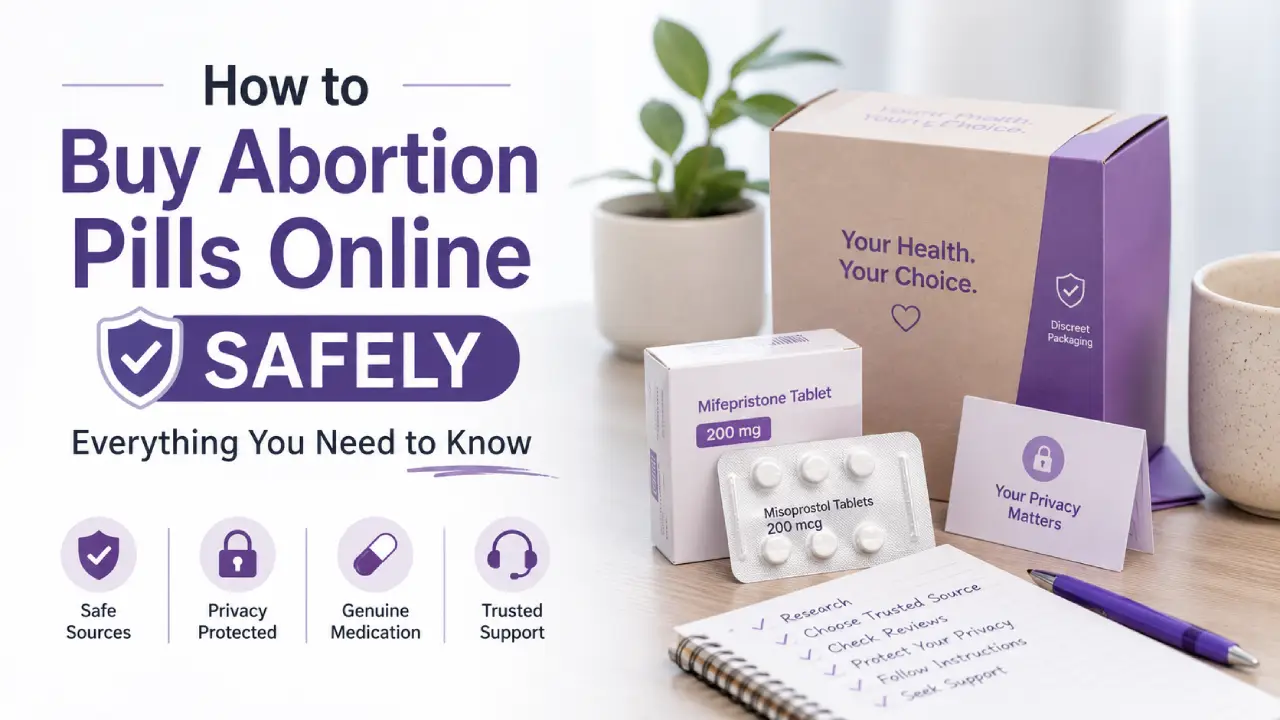
How to Buy Abortion Pills Online Safely: Everything You Need to Know
-
 Amanda
 - Posted on
- 0 comments

Searching for accurate information about ending a pregnancy can feel overwhelming, especially when you’re not sure which sources to trust. Many people start their research by looking into abortion pills online, hoping to understand their options before making any decisions. That’s a smart first step, but it’s worth knowing exactly what you’re getting into before you go further.
The internet is often the first place people turn to because it feels private and immediate. You can search at 2 a.m. if you need to, without an appointment or a waiting room. But not every source online is reliable, and medical accuracy matters more here than almost anywhere else.
This guide walks through what medical abortion actually involves, how the pills work, what side effects to expect, and how to find legitimate medical support along the way.
Understanding Medical Abortion
Medical abortion is a non-surgical method of ending an early pregnancy using medication instead of a procedure. It’s typically an option up to 10 weeks of pregnancy, though this can vary depending on where you live and your individual health situation.
The process usually involves two different medications taken a day or two apart. The first stops the pregnancy from continuing, and the second causes the uterus to empty.
Misoprostol pills play a central role in this process. They’re often used either alongside another medication or, in some cases, on their own depending on protocol and availability.
How Abortion Pills Work
Step 1: The First Medication
The first pill, typically mifepristone, blocks progesterone, a hormone the pregnancy needs to continue developing. Without it, the lining of the uterus begins to break down.
Step 2: The Second Medication
Around 24 to 48 hours later, misoprostol is taken, usually by letting it dissolve in the cheek or under the tongue. This causes the uterus to contract and expel its contents, similar to a miscarriage.
Expected Process
Most people experience cramping and bleeding within a few hours of taking misoprostol. The heaviest bleeding and cramping usually happen in the first few hours, tapering off over the following days, though spotting can continue for a couple of weeks.
Key takeaways:
- Two medications are typically used in sequence
- Misoprostol triggers contractions and bleeding
- The process mimics a natural miscarriage
- Timing and dosage should follow medical guidance
Things to Consider Before Buying Online
Before looking into pills and abortion options online, there are a few things worth slowing down for.
Prescription requirements: In most countries, these medications require a prescription or at minimum a consultation with a licensed provider, even through telehealth.
Product authenticity: Counterfeit medications are a real problem online. Pills that look identical to the real thing may contain the wrong dosage or no active ingredient at all.
Safety precautions: Knowing your exact gestational age matters, since this affects which medications are appropriate and how they should be dosed.
Legal considerations: Laws vary significantly by state and country, and they’ve shifted a lot in recent years. What’s accessible in one place may not be in another.
Healthcare consultation importance: A provider can rule out an ectopic pregnancy, which medical abortion does not treat and which can become a medical emergency.
Benefits and Risks of Medical Abortion
Benefits
- Privacy: it can be done at home, away from a clinical setting
- Convenience: no surgical procedure or recovery from anesthesia
- Accessibility: telehealth has made consultations more reachable for many people
Risks
Like any medical treatment, there are risks to understand clearly. Abortion with pill side effects can range from mild to more intense, and in rare cases, complications like incomplete abortion or heavy bleeding can occur.
Knowing when to seek medical attention isn’t optional information, it’s essential. Soaking through two pads an hour for two hours straight, fever over 100.4°F, or severe pain that doesn’t ease with medication are all signs to call a doctor.
Common Abortion With Pill Side Effects
It helps to know what’s typical versus what’s concerning. Common side effects include:
- Cramping, often described as stronger than period cramps
- Bleeding that’s heavier than a normal period, especially at first
- Nausea, sometimes with vomiting
- Fatigue or general low energy
- Low-grade fever or chills for a day
- Digestive symptoms like diarrhea
Most of these settle down within a day or two. They’re uncomfortable, but expected.
Important Safety Tips Before Taking Pills
A little preparation goes a long way. Keep pain relief on hand, ideally ibuprofen, along with a heating pad for cramps. Plan to be near a bathroom and somewhere you can rest for the first day.
Have a support person nearby if possible, even just by phone. Confirm your gestational age beforehand, and know which symptoms mean you should call a provider rather than wait it out.
How to Find Legitimate, Licensed Support
If you’re considering abortion pills online, the safest path is through a licensed telehealth provider rather than an unregulated seller. Legitimate services involve a real medical consultation, confirm your pregnancy timeline, and provide pills that are lab-verified and properly dosed.
For medical abortion in the USA, organizations like Plan C (plancpills.org) maintain updated, state-by-state guides to legitimate telehealth providers, and Aid Access is a long-running, clinician-staffed service used widely across the country. These services typically include follow-up support, which matters if complications arise.
Avoid sites that skip any medical questions entirely or sell pills with no prescription process at all. That’s usually a sign of counterfeit or mis-dosed medication.
Frequently Asked Questions
1. What are abortion pills?
They’re medications, typically mifepristone and misoprostol, used together to end an early pregnancy without surgery.
2. How do misoprostol pills work?
They cause the uterus to contract, expelling the pregnancy similarly to a natural miscarriage.
3. Are pills and abortion safe?
When taken under proper medical guidance with accurate dosing, this method is considered safe and effective for early pregnancies.
4. What are common abortion with pill side effects?
Cramping, bleeding, nausea, fatigue, mild fever, and digestive upset are all common and usually temporary.
5. Can I buy abortion pills online?
In many cases, yes, through licensed telehealth providers that include a medical consultation, not through unregulated sellers.
6. How long does the process take?
Most of the physical process happens within a few hours to a few days, though spotting can continue for a couple of weeks.
7. When should I contact a doctor?
If you have heavy bleeding soaking two pads an hour for two hours, a fever above 100.4°F, or pain that won’t ease, contact a provider right away.
8. What should I expect after taking abortion pills?
Cramping and bleeding within hours, tapering off over several days, with a follow-up check sometimes recommended to confirm completion.
Conclusion
Medical abortion has given many people a private, accessible option for ending an early pregnancy, but it works best when approached with accurate information and real medical support. Understanding how misoprostol pills function, recognizing normal versus concerning side effects, and knowing where to find legitimate care all matter here.
If you’re researching abortion pills online, lean toward licensed telehealth providers over unverified sellers, and don’t hesitate to involve a healthcare provider if something feels off.
Medical Disclaimer:
This content is intended for educational purposes only and should not replace professional medical advice, diagnosis, or treatment. Always consult a qualified healthcare provider regarding medical decisions, medications, or concerns related to pregnancy and reproductive health.