

How Many Pregnant Weeks: Easy Ways to Calculate Your Pregnancy
-
 Amanda
 - Posted on
- 0 comments

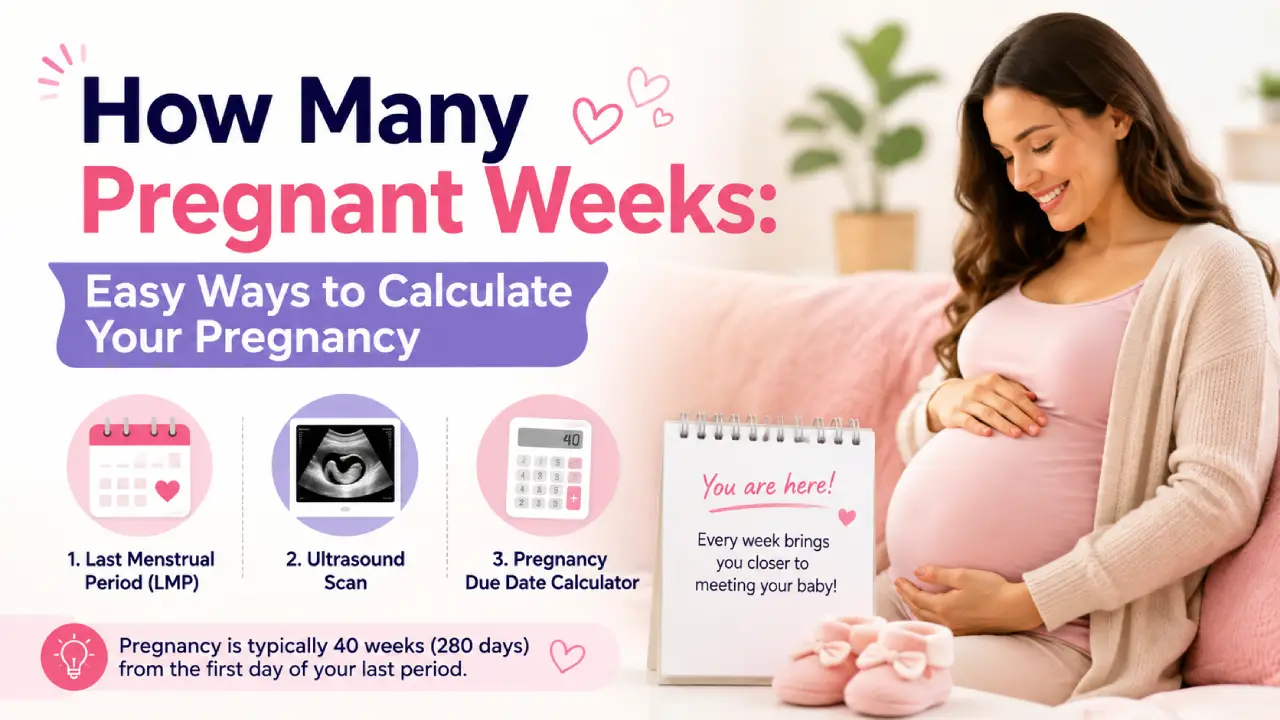
If you’ve ever tried to figure out exactly how many pregnant weeks you are, you’re not alone. It sounds simple, but between period dates, ovulation timing, and ultrasound results, the math gets confusing fast. Understanding pregnancy timing matters because it shapes everything from your due date to when you’ll have key prenatal screenings. Most healthcare providers estimate pregnancy age using a combination of your menstrual cycle and, when available, ultrasound measurements. This guide breaks down how that works, so you can calculate your own pregnancy weeks with confidence.
What Does “How Many Pregnant Weeks” Mean?
When someone asks how many pregnant weeks you are, they’re really asking about your gestational age. Gestational age is the standard way doctors track a pregnancy, and it’s counted from the first day of your last menstrual period (LMP), not from the day you actually conceived. This trips a lot of people up.
Conception typically happens about two weeks after your LMP, once ovulation occurs. So if you’re “4 weeks pregnant” by gestational age, you’ve likely only been carrying an embryo for about two weeks. Doctors use weeks instead of months because a month can span 28 to 31 days, which makes tracking fetal development inconsistent. Weeks give a standardized timeline every provider can work from.
How Pregnancy Weeks Are Calculated
There are a few methods used to pin down gestational age, and providers often cross-check them against each other.
- Last menstrual period (LMP): The default starting point, counted forward from the first day of your last period.
- Ovulation and conception: Some providers adjust dating based on a known conception window.
- Ultrasound dating: An ultrasound measures embryo or fetus size to estimate gestational age, often more accurate than LMP alone if your cycles are irregular.
- Due date estimation: Once gestational age is set, your provider calculates an estimated due date, usually 40 weeks from your LMP.
What Pregnancy Week Calculator Is and How It Works
A what pregnancy week calculator tool does this math automatically. You plug in a date, usually the first day of your LMP, and it instantly tells you how far along you are and gives you an estimated due date.
Most calculators ask for the first day of your LMP, your average cycle length, or alternatively a known conception date or ultrasound date. These tools are generally reliable for estimating gestational age, but they’re not perfect. If your cycles are irregular or you’re unsure of your LMP, an ultrasound in the first trimester gives a more accurate picture than a calculator based on guesswork.
Pregnancy Weeks to Months Conversion
One of the most common points of confusion is converting pregnancy weeks to months. Since pregnancy is tracked in weeks but people naturally think in months, here’s a simple breakdown:
| Weeks | Approximate Month | Trimester |
|---|---|---|
| 1–4 | Month 1 | First |
| 5–8 | Month 2 | First |
| 9–13 | Month 3 | First |
| 14–17 | Month 4 | Second |
| 18–22 | Month 5 | Second |
| 23–27 | Month 6 | Second |
| 28–31 | Month 7 | Third |
| 32–35 | Month 8 | Third |
| 36–40 | Month 9 | Third |
Month calculations can vary slightly depending on whether you count a “month” as exactly four weeks or as a true calendar month, which is why weeks are the more precise unit. Broadly, the first trimester covers weeks 1–13, the second covers weeks 14–27, and the third runs from week 28 until birth.
Pregnancy Weeks 12 – What Happens at 12 Weeks?
Pregnancy weeks 12 marks a meaningful milestone. By this point, the fetus has developed all its major organs and is roughly the size of a plum, with fingers and toes fully separated and the risk of miscarriage dropping noticeably compared to earlier weeks.
Common symptoms around this time include easing morning sickness for some, mild fatigue, and the first signs of a visible bump. Many providers schedule an important checkup around this stage, sometimes including genetic screening or a nuchal translucency scan.
Why Doctors Use Pregnancy Weeks Instead of Months
Weeks give doctors a consistent framework for monitoring a pregnancy from start to finish.
- Medical monitoring: Weekly tracking allows precise comparison against expected growth charts.
- Fetal growth tracking: Milestones like organ formation or viability are tied to specific weeks, not months.
- Screening tests: Many prenatal tests are only accurate within a specific week range.
- Labor planning: Full-term is defined by weeks (37–40), helping providers identify preterm labor early.
Common Mistakes When Counting Pregnancy Weeks
A few mix-ups come up again and again:
- Counting from conception instead of LMP: This can throw your count off by about two weeks.
- Using calendar months: Since months vary in length, this method is imprecise.
- Irregular menstrual cycles: LMP-based dating may need adjustment if your cycle isn’t a standard 28 days.
- Ignoring ultrasound updates: If an early ultrasound differs from your LMP calculation, it’s worth going with the more accurate figure.
Easy Ways to Calculate Your Pregnancy at Home
You don’t need to be a medical professional to get a solid estimate of your own timeline.
- Count from LMP: Mark the first day of your last period and count forward week by week.
- Use a pregnancy calculator: Enter your LMP or conception date for an instant estimate.
- Track ovulation: Count 38 weeks forward from a known ovulation date for an alternative estimate.
- Compare with ultrasound: If you’ve had an early scan, use that dating as your most reliable reference point.
For example, if your LMP was on June 1st, by August 10th you’d be roughly 10 weeks pregnant. If an early ultrasound estimates a slightly different age, your provider will likely use that date going forward.
Understanding Pregnancy Milestones Week by Week
- First trimester (weeks 1–13): Major organ development and the highest miscarriage risk window.
- Second trimester (weeks 14–27): Often called the “golden period,” with more energy and the anatomy scan around week 20.
- Third trimester (weeks 28–40): Rapid weight gain for the baby and preparation for labor and delivery.
Pregnancy Weeks to Months, Pregnancy Weeks, and Mifepristone and Misoprostol
Accurately knowing your pregnancy weeks matters for more than tracking milestones. It also plays a role in medical decisions made in early pregnancy care, since gestational age helps determine which options are appropriate at a given stage.
Confirming gestational age, typically through LMP dating combined with an ultrasound when possible, is a standard first step providers take before discussing any pregnancy-related care plan, because timing affects both safety and eligibility for certain approaches.
Mifepristone and misoprostol are two medications sometimes used together in early pregnancy under medical supervision. Mifepristone blocks a hormone needed for a pregnancy to continue, while misoprostol causes the uterus to contract. Their use depends on factors including gestational age, individual health history, and local laws, which vary by region.
This information is for general educational awareness only. Anyone considering options related to their pregnancy should speak directly with a qualified healthcare provider, who can confirm accurate gestational age and explain what is medically appropriate and legally available in their area.
Frequently Asked Questions
1. How many pregnant weeks am I if I conceived two weeks ago?
If conception happened two weeks ago, you’re likely around 4 weeks pregnant by standard gestational dating, since doctors count from your LMP, not conception.
2. Is pregnancy measured from conception or my last period?
Pregnancy is measured from the first day of your last menstrual period, not the day of conception, which typically occurs about two weeks later.
3. What pregnancy week calculator is the most accurate?
Calculators that factor in both your LMP and cycle length tend to be more accurate, but an early ultrasound remains the gold standard for precise dating.
4. How do pregnancy weeks to months conversion work?
Roughly four weeks equal one month, though because months vary in length, providers rely on weeks for the most consistent tracking.
5. What happens during pregnancy weeks 12?
By week 12, major organs have formed, miscarriage risk drops significantly, and many providers schedule genetic screening or an early scan.
6. Can an ultrasound change my pregnancy weeks?
Yes. If an ultrasound estimate differs from your LMP-based date, your provider may adjust your dating to match the ultrasound, especially in early pregnancy.
7. Why do doctors use weeks instead of months?
Weeks provide a consistent, standardized measurement that makes tracking fetal growth, scheduling tests, and planning for labor far more precise than months.
8. How accurate is calculating pregnancy weeks at home?
Home calculations using LMP are generally reliable for regular cycles, but they can be off by several days to a couple of weeks if your cycle is irregular or you’re unsure of your LMP date.
Conclusion
Figuring out how many pregnant weeks you are doesn’t have to be complicated once you understand the basics. Whether you’re counting from your last period, using an online calculator, or relying on an ultrasound for accurate dating, the goal is the same: getting a clear picture of where you are in your pregnancy. This information shapes everything from prenatal screenings to your estimated due date, so it’s worth taking the time to get right. Whenever you’re uncertain, an ultrasound and a conversation with your healthcare provider will give you the most trustworthy answer. Understanding your pregnancy weeks helps you stay informed and feel more confident throughout your pregnancy journey.
Disclaimer: This article is for educational purposes only and is not a substitute for professional medical advice, diagnosis, or treatment. Please consult a qualified healthcare provider regarding pregnancy-related concerns.