
Morning After Pill: How It Works, When to Take It, and 10 Essential Facts
-
 Amanda
 - Posted on
- 0 comments

Finding yourself in a situation where you need emergency contraception can feel stressful, especially when you are not sure what your options are. The morning after pill is one of the most common and accessible forms of emergency contraception available today, and understanding how it works can help you make a confident, informed decision when time matters most.
This guide walks through everything you need to know, from how the morning after pill works in your body to when you should take it, what side effects to expect, and how it differs from other reproductive health options.
What Is the Morning After Pill?
The morning after pill is a form of emergency contraception designed to prevent pregnancy after unprotected sex or contraceptive failure, such as a broken condom or a missed birth control dose. It is not the same as a regular birth control pill, and it is not intended for routine use. Most versions contain either levonorgestrel or ulipristal acetate, two hormone compounds that work in slightly different ways to delay or prevent ovulation.
It is widely available over the counter in many countries without a prescription, though access rules vary depending on where you live and which type of pill you need.
How Does the Morning After Pill Work?
The morning after pill primarily works by delaying or stopping ovulation, the process where an egg is released from the ovary. If there is no egg to fertilize, sperm cannot cause a pregnancy. Some research also suggests it may thicken cervical mucus, making it harder for sperm to reach an egg if ovulation has already begun.
It is important to understand that the morning after pill does not end an existing pregnancy. If implantation has already occurred, the pill will have no effect. This is one of the key distinctions that separates it from abortion pills, which work through a completely different mechanism.
When to Take It: Timing Windows
Timing is the single most important factor in how effective the morning after pill will be.
- Levonorgestrel-based pills are most effective when taken within 72 hours of unprotected sex, with declining effectiveness the longer you wait.
- Ulipristal acetate-based pills remain effective for up to 120 hours (five days) after unprotected sex, and tend to maintain effectiveness more consistently across that window.
- The sooner it is taken after unprotected sex, the higher the chance of preventing pregnancy.
Waiting even a single extra day can noticeably reduce effectiveness, so it is worth acting quickly if you think you need emergency contraception.
Morning After Pill vs. Abortion Pills: Key Differences
These two terms are often confused, but they refer to entirely different processes.
The morning after pill prevents pregnancy from occurring in the first place by stopping or delaying ovulation before fertilization or implantation happens. Abortion pills, on the other hand, are used after a pregnancy has already been confirmed and work by ending that existing pregnancy through a different hormonal mechanism.
If you are already pregnant, the morning after pill will not work and should not be used as a substitute for abortion medication. Anyone unsure which situation applies to them should speak with a licensed healthcare provider or pharmacist before taking any medication.
10 Essential Facts About the Morning After Pill
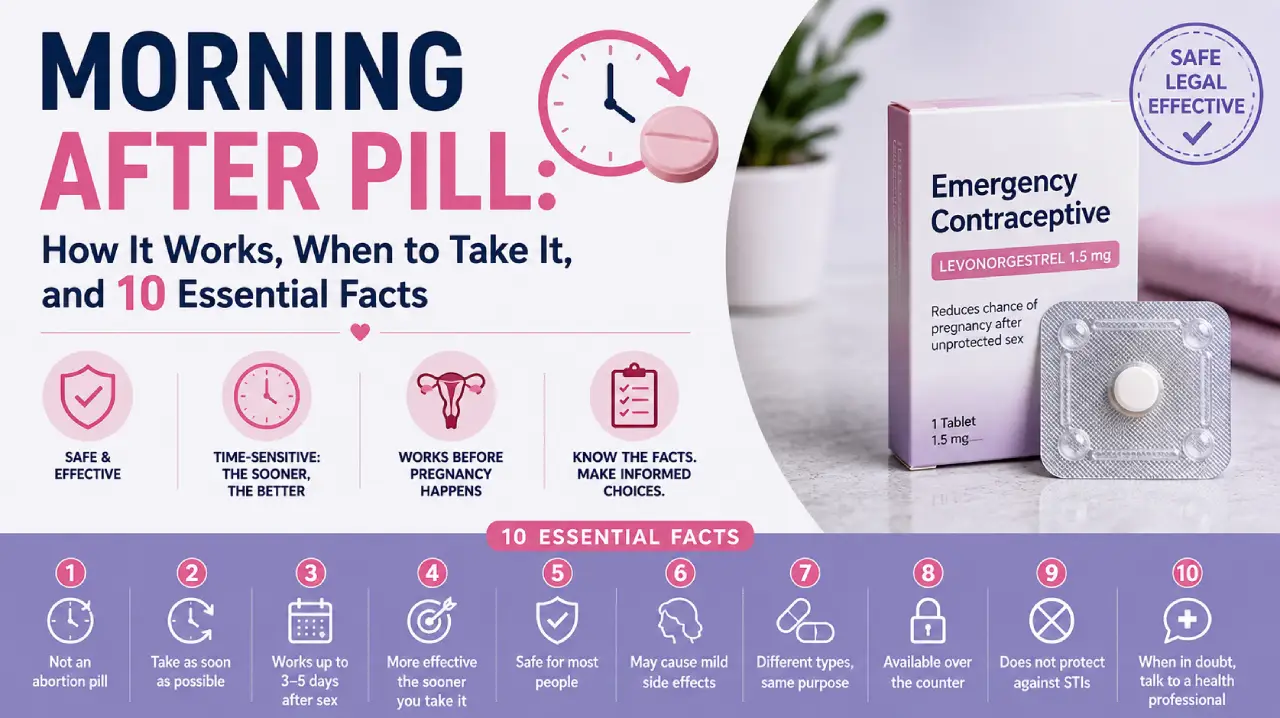
- It works best the sooner it is taken after unprotected sex.
- It is not effective if you are already pregnant.
- It does not protect against sexually transmitted infections.
- It can be taken more than once if needed, though it is not meant for regular use.
- It may temporarily disrupt your normal menstrual cycle.
- Body weight can affect how well certain types work, particularly levonorgestrel pills.
- It is available without a prescription in many regions.
- It does not cause infertility or long-term reproductive harm.
- It can be taken regardless of where you are in your menstrual cycle.
- It works differently depending on the active ingredient it contains.
Morning After Pill Side Effects
Like any medication, the morning after pill can cause side effects, though most are mild and temporary.
Common side effects include:
- Nausea
- Fatigue
- Headache
- Breast tenderness
- Abdominal pain
- Irregular bleeding or spotting
- A change in the timing of your next period
Less common but more serious symptoms that warrant medical attention include severe abdominal pain, unusually heavy bleeding, or signs of an allergic reaction such as difficulty breathing or swelling. If any of these occur, contact a healthcare provider promptly.
Most people find that side effects resolve within a few days without needing treatment.
Effectiveness and Limitations
The morning after pill significantly reduces the risk of pregnancy, but it is not 100 percent effective. Levonorgestrel pills generally reduce pregnancy risk by around 75 to 89 percent when taken within the recommended window, while ulipristal acetate tends to perform slightly better, especially closer to the five day mark.
Effectiveness can be influenced by factors such as timing, body weight, and whether ovulation has already occurred. Because of these variables, the morning after pill should never be relied upon as a primary or ongoing method of birth control. Regular contraception, such as pills, IUDs, or condoms, remains far more reliable for everyday use.
Where to Access the Morning After Pill
The morning after pill can typically be obtained through a licensed pharmacy, a healthcare clinic, or a doctor’s office, depending on local regulations. In many places, levonorgestrel-based options are sold over the counter without age restrictions or a prescription, while ulipristal acetate versions may require a prescription in certain regions.
Before purchasing, it can help to check with a pharmacist about which option is appropriate for your situation, particularly regarding timing since your last unprotected sex and any medications you are currently taking. Licensed providers can also answer questions about interactions, dosage, and what to expect afterward.
Frequently Asked Questions
1. Can I take the morning after pill if I am breastfeeding?
Levonorgestrel is generally considered compatible with breastfeeding, but it is best to confirm with a healthcare provider, especially for ulipristal acetate.
2. Will the morning after pill affect my future fertility?
No. It has no known long-term impact on fertility and does not affect your ability to get pregnant in the future.
3. Can I take the morning after pill more than once in a cycle?
Yes, though it is intended for occasional emergency use rather than as a regular contraception method.
4. Does the morning after pill work if I am already pregnant?
No. It only prevents pregnancy from starting and has no effect if implantation has already occurred.
5. Do I need an ID or prescription to buy it?
This depends on your location and the type of pill. Levonorgestrel is often available without a prescription, while other types may require one.
6. Can the morning after pill cause a delay in my period?
Yes, it is common for the next period to arrive earlier or later than expected after taking it.
7. Does body weight affect how well it works?
Yes, particularly with levonorgestrel-based pills, which may be less effective at higher body weights compared to ulipristal acetate.
8. Is the morning after pill the same as the abortion pill?
No. They work through different mechanisms and are used in different circumstances, as outlined earlier in this article.
Conclusion
The morning after pill remains one of the most accessible and effective tools for preventing pregnancy after unprotected sex or contraceptive failure, but understanding how and when to use it makes a real difference in its effectiveness. Acting quickly, choosing the right type based on your timing window, and knowing what side effects to expect can help you navigate the experience with more confidence. If you have questions about which option is right for you, a pharmacist or healthcare provider can offer guidance specific to your situation.
Medical Disclaimer:
This article is for informational purposes only and is not medical advice. Consult a licensed healthcare provider before taking any medication.