
Mifepristone and Misoprostol: Uses, Dosage, Safety, and What to Expect
-
 Amanda
 - Posted on
- 0 comments

If you’ve been searching for clear, honest information about medication abortion, you’ve probably come across the names Mifepristone and Misoprostol more than once. These two medications work together as part of a regulated, well-studied medical process, and understanding how they function, what to expect, and when to seek care can make a stressful situation feel a little more manageable. This guide walks through the basics: what each medication does, how they’re used together, what the recovery process typically looks like, and the safety information every patient should know before starting treatment.
What Is Mifepristone?
Mifepristone is a medication that blocks progesterone, a hormone your body needs to sustain a pregnancy. Without enough progesterone, the lining of the uterus begins to break down, and the pregnancy can no longer continue.
How it works: Mifepristone attaches to progesterone receptors in the body, essentially blocking the hormone’s signal. This softens and opens the cervix slightly and detaches the pregnancy from the uterine wall.
Medical uses: Beyond medication abortion, mifepristone has been studied for other reproductive health conditions, though its most common and FDA-approved use is in combination with misoprostol for ending an early pregnancy.
Why it’s used before misoprostol: Mifepristone helps prepare the uterus for the next step. When followed by misoprostol, it can make the medication process more effective than misoprostol alone. The two medicines work together, with mifepristone acting first and misoprostol completing the process.
What Is Misoprostol?
Misoprostol is typically taken 24 to 48 hours after mifepristone. It belongs to a class of medications called prostaglandins.
Mechanism of action: Misoprostol causes the uterus to contract and the cervix to soften further, which helps the body expel the pregnancy tissue, similar to a miscarriage.
Common medical uses: Misoprostol has several medical applications outside of abortion care, including managing stomach ulcers and helping with labor induction in certain clinical settings.
Role in medical abortion: In the abortion process specifically, misoprostol is the medication that triggers cramping and bleeding, which is how the body completes the process that mifepristone started.
How Mifepristone and Misoprostol Work Together
Understanding the sequence matters, because these two drugs aren’t interchangeable and don’t work the same way on their own.
Step-by-step explanation:
- Mifepristone is taken first, usually as a single tablet, often under guidance from a healthcare provider or clinic.
- The pregnancy stops developing as progesterone is blocked.
- Misoprostol is taken next, usually 24 to 48 hours later, though timing can be adjusted based on medical advice.
- The uterus contracts, and bleeding and cramping begin, typically within a few hours.
Timing between medications: This gap between the two pills isn’t arbitrary. It gives mifepristone time to do its job of detaching the pregnancy before misoprostol induces the contractions needed to complete the process.
What happens after each medicine: After mifepristone, many people notice little to no physical change right away. After misoprostol, symptoms tend to start more quickly, often within one to four hours, with bleeding heavier than a typical period.
Mifepristone and Misoprostol Tablets Kit
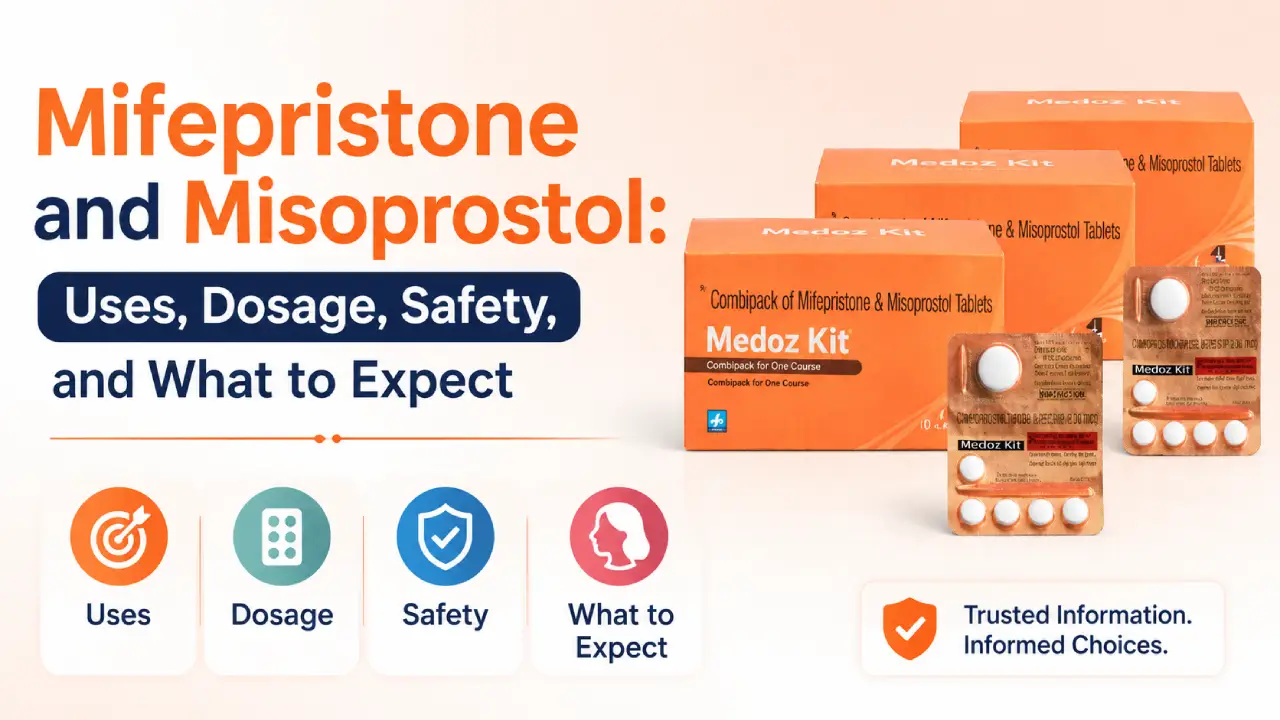
Many clinics and telehealth providers dispense both medications together as a combination pack, often referred to as a mifepristone and misoprostol tablets kit.
What’s included: A typical kit contains one mifepristone tablet and a set number of misoprostol tablets, along with written instructions covering dosage, timing, and warning signs to watch for.
How the kit is used: The mifepristone tablet is taken first, followed by the misoprostol tablets on the schedule the provider recommends. Some kits also include anti-nausea medication or pain relief, since cramping is expected.
Importance of following medical guidance: Every kit comes with instructions tailored to gestational age and individual health history. Deviating from that guidance, or skipping the medical consultation that should come before using one, increases the risk of complications or an incomplete process.
Recommended Dosage and Timing
General medical guidance: The standard regimen involves 200 mg of mifepristone taken orally, followed by misoprostol 24 to 48 hours later. Misoprostol dosing and administration route (oral, buccal, or vaginal) vary based on clinical protocols.
Typical treatment timeline: Most people complete the physical process within 24 hours of taking misoprostol, though bleeding and spotting can continue for a couple of weeks afterward.
Why dosage may vary: Gestational age is one of the biggest factors. Earlier pregnancies generally respond well to standard dosing, while later gestational ages may require adjusted protocols. This is exactly why a healthcare provider needs to confirm how far along a pregnancy is before any medication is prescribed.
What to Expect After Taking the Medication
Bleeding: Bleeding is usually heavier than a normal period and may include clots. It typically peaks within the first few hours after misoprostol and gradually tapers off over one to two weeks.
Cramping: Cramping is common and can range from mild to intense. Over-the-counter pain relief (excluding aspirin, unless a provider says otherwise) is often recommended.
Passing pregnancy tissue: This usually happens within a few hours of taking misoprostol, though the exact timing varies from person to person.
Recovery timeline: Most physical symptoms resolve within a week or two, though light bleeding or spotting can persist longer. Energy levels typically return to normal within a few days.
Emotional and physical changes: It’s common to experience a mix of emotions, relief, sadness, anxiety, or all three, and that’s a normal part of the process. Physically, some fatigue and mild hormonal shifts are expected as the body returns to its pre-pregnancy state.
Safety Information
Who should not use these medications: These drugs aren’t appropriate for everyone. People with certain conditions, including confirmed ectopic pregnancy, specific bleeding disorders, or chronic adrenal insufficiency, should not use this regimen without direct medical supervision.
Warning signs requiring medical attention: Soaking through more than two thick pads per hour for two consecutive hours, fever lasting more than 24 hours, severe abdominal pain that doesn’t improve with medication, or foul-smelling discharge all warrant prompt medical evaluation.
Possible complications: While uncommon, complications can include incomplete abortion (requiring a follow-up procedure), infection, or heavy bleeding that needs medical intervention.
When to seek emergency care: Signs like very heavy bleeding, dizziness, fainting, or a fever above 100.4°F should be treated as urgent. Don’t wait it out; contact a provider or go to an emergency room.
Side Effects of Mifepristone and Misoprostol
Common side effects: Cramping, bleeding, nausea, diarrhea, chills, and fatigue are all expected parts of the process rather than red flags on their own.
Less common side effects: Some people experience headaches, dizziness, or a low-grade fever that resolves within a day.
Serious symptoms: Persistent high fever, severe unrelenting pain, or bleeding that doesn’t slow down after the first day or two should prompt a call to a healthcare provider right away.
Effectiveness of Mifepristone and Misoprostol
Success rates: When taken together as directed, this regimen is highly effective, with success rates generally cited between 95% and 98% for pregnancies within the recommended gestational window.
Factors affecting effectiveness: Gestational age, correct dosing, and timing between the two medications all influence outcomes. Taking misoprostol without mifepristone first, or skipping doses, lowers effectiveness considerably.
Follow-up care: A follow-up appointment, often involving an ultrasound or blood test, helps confirm the process is complete. This step matters because it catches the small percentage of cases that may need additional treatment.
Pills and Abortion: Understanding the Facts
There’s a lot of misinformation floating around about pills and abortion, so it helps to separate fact from myth.
Medication abortion using mifepristone and misoprostol is one of the most extensively studied medical procedures available, with decades of clinical data behind it. It is not the same as emergency contraception (“the morning-after pill”), which prevents pregnancy rather than ending one already in progress.
A common misconception is that medication abortion is riskier than a surgical procedure. In reality, both are considered safe when done under appropriate medical guidance, and complication rates for medication abortion are low. Another misconception is that the process is always quick and painless; cramping and bleeding are a normal and expected part of how the medication works, not a sign that something has gone wrong.
Access to this regimen, along with legal availability, varies by location, so checking current regulations and finding a licensed provider is an essential first step for anyone considering this option.
FAQs
1. What are Mifepristone and Misoprostol used for?
They’re used together for medication abortion in early pregnancy. Misoprostol on its own also treats stomach ulcers and is used in some labor induction protocols.
2. How long does bleeding last after taking Misoprostol?
Heavier bleeding usually lasts a few days, with lighter spotting continuing for one to two weeks. Every body is different, so some variation is normal.
3. Is the mifepristone and misoprostol tablets kit effective?
Yes. When used as directed and within the appropriate gestational window, this combination has a success rate generally between 95% and 98%.
4. Can I access this medication safely?
Yes, through a licensed healthcare provider or a verified telehealth service that conducts a proper medical consultation first. This step confirms gestational age, rules out contraindications like ectopic pregnancy, and ensures you receive accurate dosing instructions.
5. What side effects are normal?
Cramping, bleeding, nausea, chills, and fatigue are all typical. These usually resolve within a few days to two weeks.
6. When should I seek medical care?
If you’re soaking more than two pads an hour for two hours straight, running a fever for more than 24 hours, or experiencing pain that doesn’t improve with medication, contact a provider or seek emergency care.
7. How long does recovery usually take?
Most physical recovery happens within one to two weeks, though your body’s hormone levels may take four to six weeks to fully return to a pre-pregnancy baseline.
8. Is follow-up testing necessary?
Yes. A follow-up visit, usually involving an ultrasound or blood test, confirms the process is complete and catches the rare cases that may need further treatment.
Conclusion
Mifepristone and Misoprostol work together in a specific sequence, first blocking the hormone that sustains a pregnancy, then triggering the contractions that complete the process. Getting the dosage and timing right matters, and so does having a clear picture of what to expect: bleeding, cramping, and a recovery period that typically resolves within a couple of weeks. Most people tolerate this regimen well, but knowing the warning signs that call for medical attention is just as important as understanding how the medication works. None of this replaces a conversation with a healthcare provider, who can account for your specific health history and gestational age before you begin.
Medical Disclaimer: This article is for educational purposes only and does not replace professional medical advice, diagnosis, or treatment. Consult a qualified healthcare provider before using mifepristone, misoprostol, or any abortion medication.