

What Pregnancy Week Calculator Is Best for Tracking Your Pregnancy?
-
 Amanda
 - Posted on
- 0 comments

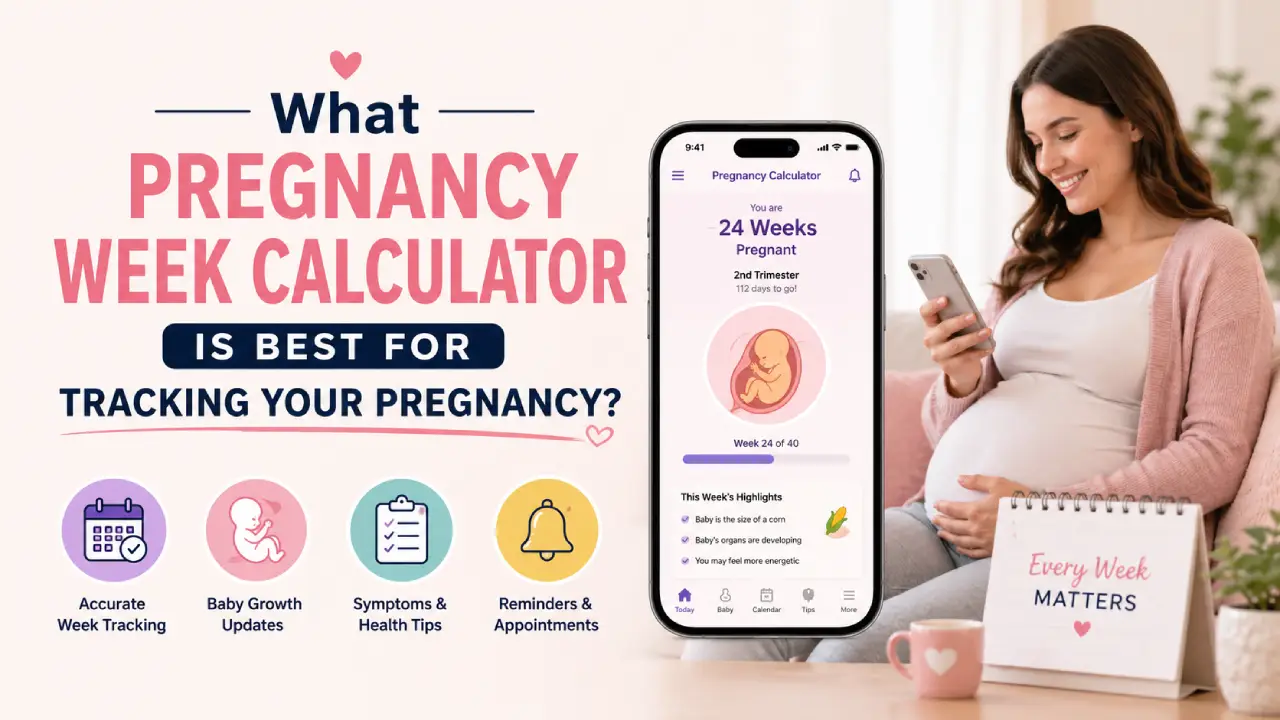
Finding out you’re expecting comes with a flood of questions, and one of the first is usually “how far along am I, exactly?” That’s where a pregnancy week calculator comes in. If you’ve been searching for what pregnancy week calculator gives the most reliable estimate, you’re not alone. These tools have become one of the most common first steps people take after a positive test, offering a quick way to understand gestational age, an estimated due date, and what stage of pregnancy they’re in.
This article walks through how these calculators work, what makes one useful, and what to keep in mind so the numbers make sense in context.
What Is a Pregnancy Week Calculator?
A pregnancy week calculator is a simple tool that estimates how far along a pregnancy is, based on a few key pieces of information. Most calculators ask for:
- The first day of your last menstrual period (LMP)
- An estimated conception date, if known
- An estimated due date, if one has already been given
From there, the tool returns your current pregnancy week and day, along with a projected due date.
It’s worth understanding upfront that pregnancy is typically dated from the first day of the last menstrual period, not the day conception actually happened. This might seem like an odd starting point since conception hasn’t occurred yet on that date, but it’s the standard used across medicine because the exact day of conception is rarely known with certainty, while the start of a period is usually easier to pinpoint.
How Does a Pregnancy Week Calculator Work?
The math behind these calculators is fairly straightforward. Using the LMP date, the calculator counts forward, treating a full pregnancy as roughly 40 weeks, or about 280 days, from that starting point.
The LMP is used as the reference point because it gives a consistent, calendar-based anchor. Ovulation and conception generally happen around two weeks after the LMP in a typical cycle, so pregnancy weeks and actual fetal development aren’t quite the same thing in the earliest stages. This is normal and expected.
It’s also common for ultrasound dating, especially early ultrasounds, to produce a slightly different estimate than an LMP-based calculation. When that happens, a healthcare provider may use the ultrasound measurement to refine the due date, since it’s based on measurable growth rather than reported dates alone.
Why Tracking Pregnancy Weeks Matters
Knowing your pregnancy weeks isn’t just a curiosity. It helps you and your healthcare provider stay oriented around what to expect and when.
Tracking pregnancy weeks can help you:
- Understand general pregnancy milestones as they come up
- Anticipate the timing of prenatal appointments and screenings
- Recognize which physical and hormonal changes are common at a given stage
- Get a rough sense of how much time remains before the due date
- Follow along more easily when a healthcare provider describes your progress, since medical teams almost always speak in weeks rather than months
Because so much of prenatal care is scheduled around specific gestational windows, having an accurate week count makes it easier to know what’s coming next.
Pregnancy Weeks to Months: How the Conversion Works
People often want to know how pregnancy weeks translate into months, but the conversion isn’t as clean as dividing by four. Calendar months don’t all have the same number of days, so pregnancy weeks to months conversions are always approximate.
As a general reference:
- Weeks 1–4: Month 1
- Weeks 5–8: Month 2
- Weeks 9–13: Month 3
- Weeks 14–17: Month 4
- Weeks 18–22: Month 5
- Weeks 23–27: Month 6
- Weeks 28–31: Month 7
- Weeks 32–35: Month 8
- Weeks 36–40: Month 9
Healthcare professionals generally prefer to talk about pregnancy weeks rather than months because weeks offer a more precise, standardized way to describe progress. A “month” can mean 28, 30, or 31 days depending on the calendar, but a week is always seven days, which makes it a more dependable unit for something as time-sensitive as pregnancy.
What Can Affect a Pregnancy Week Calculation?
No calculator is perfect, and several factors can make an estimate less precise:
- Irregular menstrual cycles, which make the LMP a less reliable marker
- Uncertainty about the exact date of the last period
- Recent use of hormonal contraception, which can affect cycle patterns
- Uncertain timing of conception
- Ovulation happening earlier or later than the typical mid-cycle window
- Differences between LMP-based dating and ultrasound-based dating
None of these factors mean the calculator is “wrong” in a meaningful sense. They simply reflect the fact that a calculator works from the information it’s given, and that information isn’t always precise.
What Pregnancy Week Calculator Is Best?
So, what pregnancy week calculator is actually worth using? The best options share a few common qualities rather than any single standout feature.
Look for a calculator that offers:
- Simple, straightforward date entry
- A clearly explained calculation method
- Results showing both pregnancy week and day
- An estimated due date alongside the week count
- Results presented in plain, easy-to-understand language
- Transparency about the tool’s limitations
- No exaggerated or misleading medical claims
In other words, the “best” calculator isn’t necessarily the flashiest one. It’s the one that gives you a clear, honest estimate based on sound pregnancy-dating principles, without overstating its own accuracy.
How Accurate Are Pregnancy Week Calculators?
It helps to think of these tools as estimates rather than exact measurements. LMP-based calculations depend on the accuracy of the date you enter, and cycle length variations can shift the real gestational age by several days in either direction.
Ultrasound measurements, particularly in the first trimester, tend to be considered more precise for confirming gestational age because they’re based on physical growth rather than reported dates. When there’s a meaningful gap between LMP-based and ultrasound-based estimates, a healthcare professional may adjust the due date accordingly.
Pregnancy Is Weeks: Why Healthcare Professionals Use Weeks
Once you’re pregnant, weeks become the default language of care. Pregnancy is weeks in the sense that nearly every clinical conversation, from appointment scheduling to milestone tracking, is framed around a specific week rather than a month or trimester alone.
This happens because weeks offer consistency. A statement like “you’re at 32 weeks” carries precise meaning, while “you’re in your eighth month” leaves more room for interpretation. For anything involving timing, whether that’s a screening test, a growth check, or a delivery window, weeks simply communicate more clearly.
How to Use a Pregnancy Week Calculator Correctly
Getting a useful result comes down to a few simple steps:
- Find the first day of your last menstrual period.
- Enter that date into a reliable calculator.
- Review the estimated pregnancy week and day.
- Check the estimated due date provided.
- Bring up any uncertain or conflicting dates with a healthcare professional at your next visit.
Following this order helps you get a result that’s as useful as possible given the information available.
Important Things to Remember About Pregnancy Dating
A few key points are worth keeping in mind throughout pregnancy:
- A calculator provides an estimate, not a diagnosis.
- The LMP is commonly used for initial dating, but it’s a starting point, not the final word.
- Not everyone has a textbook 28-day cycle, and that’s normal.
- Conception typically occurs later than the LMP date itself.
- Ultrasound can offer additional, often more precise, information.
- Any uncertain or conflicting pregnancy dates should be confirmed by a qualified healthcare professional.
Medical Abortion in USA and Misoprostol Online Pharmacy
While researching pregnancy timing, some people also come across information related to medical abortion in USA and options like a misoprostol online pharmacy. Accurate pregnancy dating plays an important role in these conversations too, since gestational age is one of the factors that affects what options may be appropriate and safe at a given point in pregnancy.
This kind of information should never be treated as a substitute for medical guidance. Eligibility, medication safety, dosing, and legal considerations vary and should always be discussed directly with a licensed healthcare professional who can review individual circumstances.
Frequently Asked Questions
1. What pregnancy week calculator?
It’s a tool that estimates gestational age and due date based on details like your last menstrual period.
2. How does a pregnancy week calculator calculate pregnancy weeks?
It typically counts forward from the first day of your LMP, using an average 40-week pregnancy timeline.
3. What date should I enter into a pregnancy week calculator?
The first day of your last menstrual period is the standard date most calculators require.
4. Can a pregnancy week calculator tell me my exact due date?
It provides an estimated due date, not a guaranteed one, since actual delivery timing varies.
5. How do I convert pregnancy weeks to months?
Because months vary in length, the conversion is approximate rather than exact, generally grouped in four-to-five week blocks.
6. Why might my calculator result differ from an ultrasound?
Ultrasound dating is based on measured growth and can sometimes differ slightly from LMP-based calendar estimates.
7. Can I use a pregnancy week calculator with irregular periods?
Yes, though the result may be less precise, and a healthcare provider can help confirm dating through other methods.
8. When should I confirm my pregnancy dates with a healthcare professional?
Anytime your LMP is uncertain, your cycle is irregular, or your calculator result doesn’t match other information you’ve received.
Conclusion
At the end of the day, the question of what pregnancy week calculator is best comes down to finding one that’s clear, honest about its limitations, and built on reliable dating principles like the LMP method. These tools are genuinely useful for getting a general sense of gestational age and an estimated due date, but they work best as a starting point rather than a final answer. For anything specific to your own pregnancy, a healthcare professional remains the best source of guidance.
Medical Disclaimer: This article is for general educational purposes only and is not medical advice. Pregnancy week calculators provide estimates. Always consult a qualified healthcare professional for personal pregnancy dating, diagnosis, or treatment decisions.